Table of Contents
Local SEO Backlinks: 7 Free Ways Small Businesses Can Build Them Without Spending a Dollar
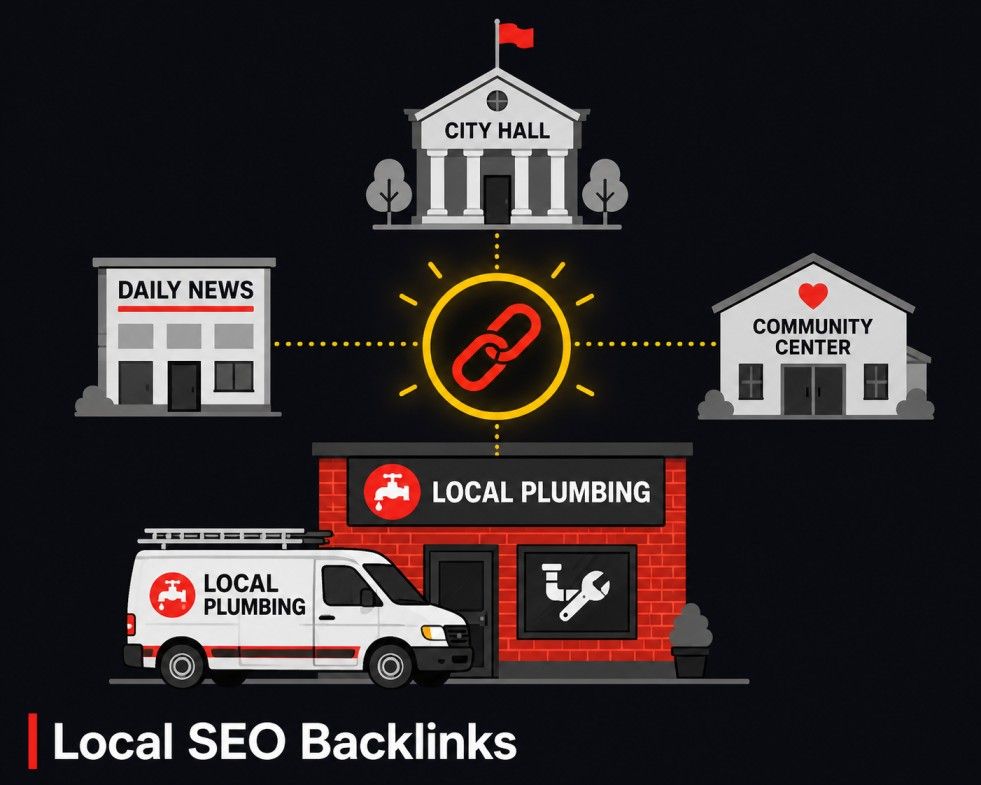
Most small service businesses skip link building entirely. And honestly? That is why their competitors keep outranking them on Google Maps even when those competitors have fewer reviews and a worse website.
Local SEO backlinks are one of the top 5 ranking factors for local search. But you do not need a big budget or an SEO agency to get them. You just need to know where to look.
This guide covers 7 free ways to build local SEO backlinks the kind Google actually trusts.
1. What is a local SEO backlink?
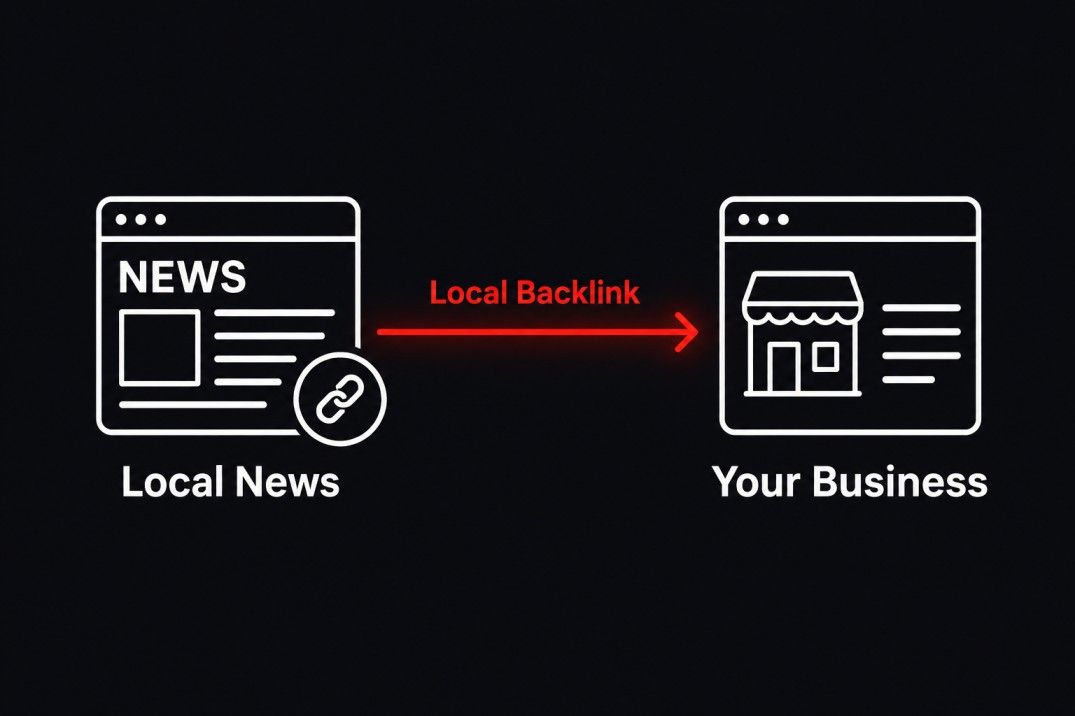
A local SEO backlink is a link from another website to yours where that website is connected to your city, your industry, or both.
For example, if a local news site writes a story about your roofing company and links to your website, that is a local backlink. If your city's Chamber of Commerce lists your business with a link, that is a local backlink too.
The difference between a local backlink and a regular backlink is relevance. Google sees a link from a local plumbing directory or a neighborhood blog as much stronger proof that your business is real and trusted in your area.
2. Why local SEO backlinks matter for your Google Maps ranking
When someone searches "plumber near me" or "HVAC company in Dallas," Google decides who shows up in the Map Pack based on three things: relevance, distance, and prominence.
Local SEO backlinks directly build your prominence score Google's measure of how well-known and trusted your business is. A business with 10 high-quality local backlinks from a chamber of commerce, local news sites, and community organizations will consistently outrank a competitor with 200 irrelevant directory links.
That is good news for small businesses. You do not need hundreds of links. You need the right ones.
90% of local SEO experts rate link quality and diversity as valuable ranking factors. 75% value links from community sites, and 70% value local news sources.
And it goes beyond Google. AI models like Google Gemini and ChatGPT use backlinks as a primary verification signal. If top-tier sites link to you, AI models are far more likely to cite your brand as the definitive source in their generated answers.
So the same links that help you rank on Google Maps also help you show up when someone asks ChatGPT or Perplexity for a recommendation.
3. 7 ways to get local SEO backlinks for free
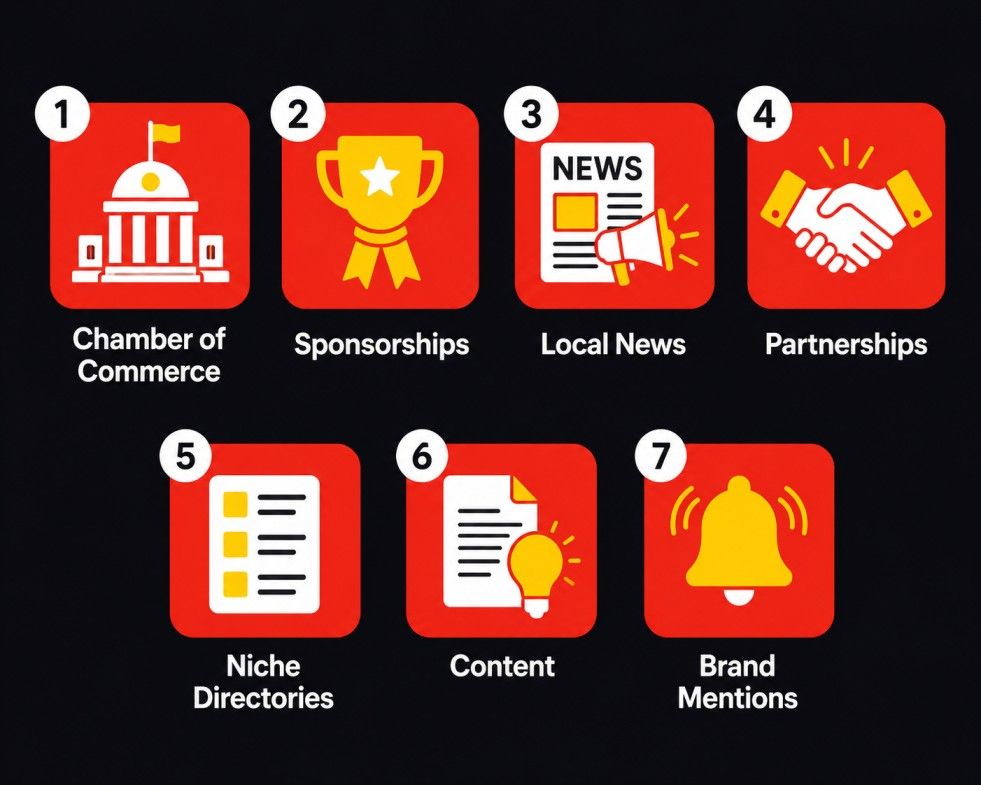
1. Get listed in your city's Chamber of Commerce
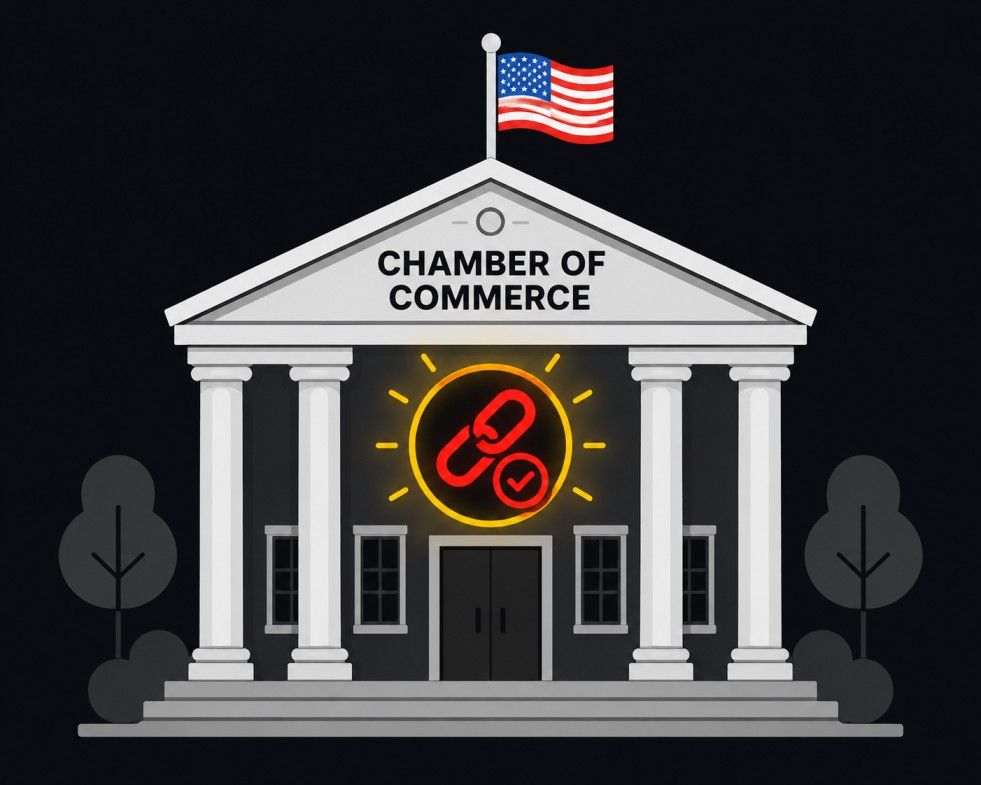
This is the single easiest high-quality local backlink you can get. Most chambers of commerce have a member directory on their website with a link to your site.
Annual membership usually costs $100-$300. For SEO purposes, that is one of the best investments you can make a link from a .org or government-adjacent site in your city sends a very strong local authority signal to Google.
How to do it: Search "[your city] chamber of commerce" → click "Join" or "Become a member."
2. Sponsor a local event, team, or charity
Local event websites, school sports teams, nonprofit sites, and community organizations almost always list their sponsors with a link. You get a real local backlink. They get funding. Everyone wins.
42% of local link-building campaigns involve sponsorships or charitable collaborations.
Sponsorships do not have to be expensive. Many local little league teams, charity runs, and school events have sponsorship tiers starting at $100-$200.
How to find opportunities: Search "[your city] events sponsors" or "[your city] nonprofit sponsors" look for sites that list sponsors by name with links.
3. Get featured in local news
A single link from your local newspaper or news website is worth more than 50 links from random directories.
You do not need to do something newsworthy to get covered. Reporters always need local business owners to comment on topics like rising costs, local hiring trends, or seasonal demand.
How to do it:
• Search "[your city] business reporter" on LinkedIn and connect
• Sign up for Connectively (free version) journalists post requests for expert sources daily
• Send a short pitch: "I'm a local [plumber/HVAC tech/roofer] and available to comment on [topic] for any upcoming stories"
One placement in a local outlet builds more authority than months of directory submissions.
4. Build partnerships with businesses that serve the same customers
Think about who else your customers hire. A plumber's customers also hire electricians, roofers, and general contractors. An HVAC company's customers also hire plumbers and home inspectors.
None of those businesses compete with you directly. But they all serve the same homeowners which makes them perfect link partners.
How to do it: Reach out to 5 non-competing local businesses in your space. Offer to recommend each other on your websites. A simple "Recommended local businesses" page with links goes both ways and costs nothing.
This also works for property managers, real estate agents, and home builders all of whom regularly refer service businesses to their clients.
5. List your business in niche industry directories
Generic directories like Yelp and Yellow Pages barely move the needle anymore. What works is getting listed in industry-specific directories the ones your target customers actually use.
|
Industry |
Best Free Directories to Get Listed In |
|
Plumbers |
Angi, Thumbtack, HomeAdvisor |
|
HVAC |
ACCA Member Directory, Carrier Dealer Locator |
|
Roofers |
NRCA Member Directory, RoofingContractor.com |
|
Attorneys |
Avvo, FindLaw, Justia |
|
Dentists |
Healthgrades, Zocdoc, 1-800-Dentist |
|
Electricians |
IEC Member Directory, Angi |
|
Auto Repair |
RepairPal, ASE Shop Locator |
|
Cleaning |
HomeAdvisor, Handy, Thumbtack |
Each listing is a backlink. More importantly, each listing is a consistent NAP citation your business name, address, and phone number which also strengthens your Google Maps ranking directly.
If you want help auditing your current citations and finding missing ones, run a free local SEO audit it takes 30 seconds.
6. Write one useful piece of content your city will link to
Most link building advice focuses on outreach. But the easiest way to get links is to create something people want to reference.
For a local service business, this does not need to be complicated. One well-written, genuinely useful resource can earn links from local blogs, news sites, and community pages for years.
Good examples for service businesses:
• "How to prepare your home for a [city] winter" (HVAC, plumber)
• "What to do when your roof gets damaged in a [city] hailstorm" (roofer)
• "How much does a dental cleaning cost in [city] in 2026?" (dentist)
• "The [city] homeowner's guide to electrical safety" (electrician)
Make it specific to your city. Include real local details. That is what makes it linkable and what makes it rank.
See how we build authority backlinks for service businesses: authority backlinks service.
7. Claim unlinked brand mentions
This one is often overlooked. As your business gets mentioned in reviews, local Facebook groups, and community forums, sometimes those mentions do not include a link to your website.
Those are easy backlinks waiting to be claimed.
How to find them: Set up a free Google Alert for your business name (go to google.com/alerts). When you get a notification that someone mentioned you without linking to your site, send a short, friendly email asking if they would mind adding a link. Most people say yes.
4. Which local SEO backlinks are worth your time?
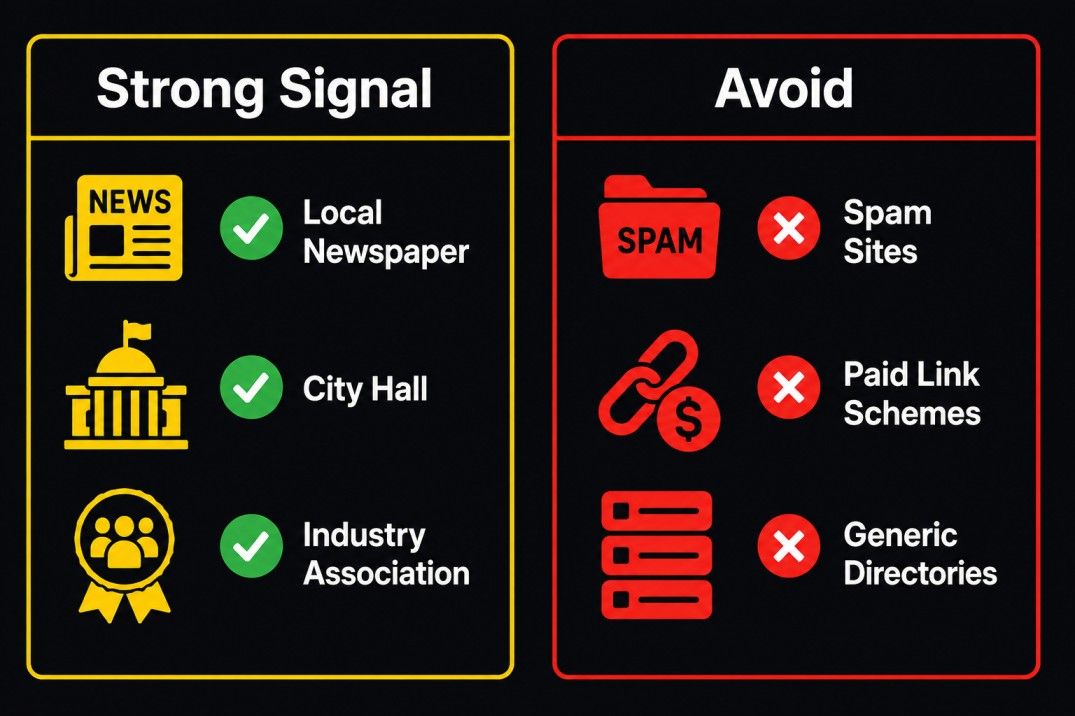
Not all links are equal. Here is a simple way to judge whether a potential link is worth pursuing:
Strong signal pursue these:
• Local newspaper or news website
• Chamber of Commerce directory
• City or county government website (.gov)
• Industry association directory
• Local university or college site (.edu)
• A real local business with actual customers
Weak signal low priority:
• Generic web directories with no real traffic
• Sites that list hundreds of unrelated businesses
• Any site that asks you to pay per link
Avoid entirely:
• PBN links (private blog networks)
• Fiverr link packages
• Any site that exists only to sell backlinks
The goal is not to collect as many links as possible. The goal is to build a backlink profile that looks like a real, trusted local business because that is what Google and AI search engines reward.
5. How long before you see results?
Most local businesses start seeing movement in their Google Maps ranking within 60-90 days of consistent link building. Full results like moving into the top 3 on the Map Pack usually take 4-6 months.
The businesses that see results fastest are the ones that combine link building with a fully optimized Google Business Profile and a steady flow of new reviews. Links alone move the needle. Links plus a strong GBP moves it much faster.
If you want to see where you stand right now which links you have, which citations are wrong, and what your Google Business Profile is missing get a free local SEO audit. It scores your site across 17 local SEO factors in 30 seconds.
Industry-Specific Link Building Opportunities by Trade
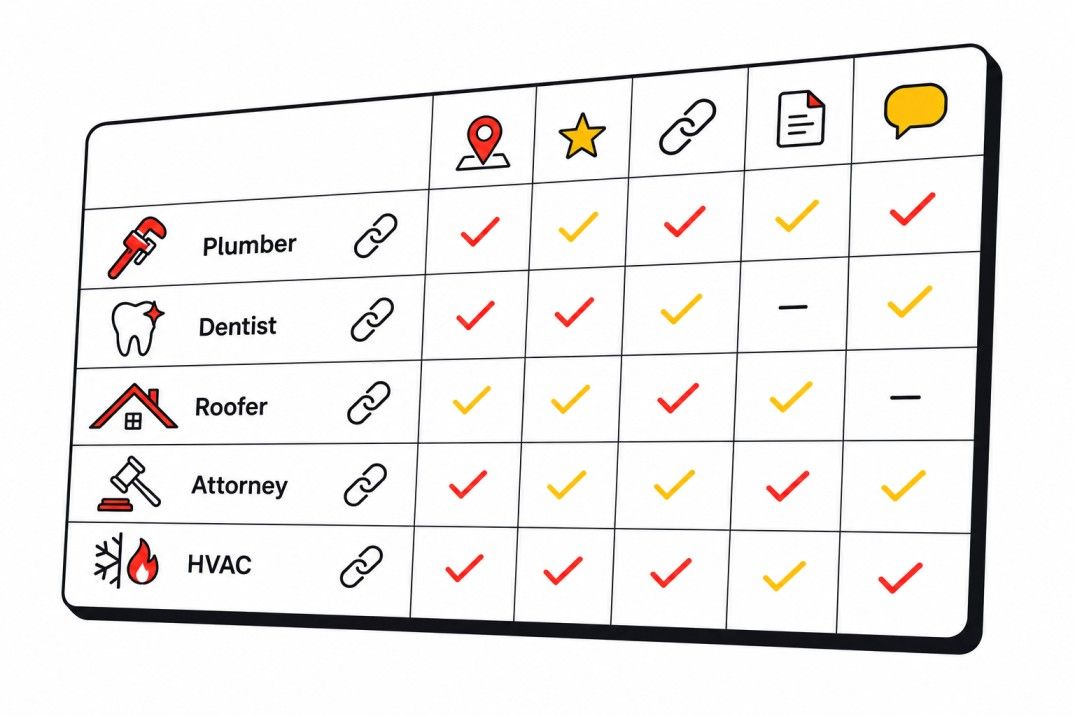
The existing directory table in method 5 above covers where to get listed. This table goes deeper it shows the best link building strategies for each trade based on the types of local organizations and content opportunities that exist in your industry.
Every trade has link sources that other industries simply do not have access to. A roofer can get links from storm damage resource pages that a dentist never could. An attorney can get listed in legal aid referral directories that do not exist for plumbers. Knowing your industry's unique opportunities means you spend outreach time on the highest-value targets instead of sending the same generic pitch everyone else sends.
| Industry | Best Free Link Building Sources | Best Anchor Text to Use | Priority Level |
|---|---|---|---|
| HVAC | Chamber of Commerce, utility company contractor lists, home builder association directories, real estate agent partner pages, local energy efficiency program sites, home show sponsor pages | "[City] HVAC contractor", "[Business Name]", "heating and cooling services" | High |
| Plumbers | Chamber of Commerce, home inspector partner pages, property management vendor lists, local hardware store sites, home builder directories, water utility resource pages | "emergency plumber in [City]", "[Business Name] plumbing", "local plumber" | High |
| Roofers | Chamber of Commerce, BBB listing, insurance company preferred vendor pages, real estate agent resource pages, storm damage preparedness resource pages, local home show sponsors | "[City] roofing company", "[Business Name]", "roof repair near me" | High |
| Dentists | Healthgrades, Zocdoc, local school wellness partner pages, community health fair sponsor pages, dental association directories, local pediatrician referral pages | "family dentist in [City]", "[Practice Name]", "dentist near [Neighborhood]" | High |
| Attorneys | Avvo, FindLaw, Justia, state and local bar association directories, legal aid referral pages, university alumni directories, community legal clinic partner pages, nonprofit board member bios | "[City] personal injury attorney", "[Firm Name]", "[Practice Area] lawyer" | High |
| Electricians | Chamber of Commerce, IEC member directory, home builder association sites, solar installer partner pages, contractor licensing board directories, local smart home installer listings | "licensed electrician [City]", "[Business Name]", "electrical contractor" | Medium-High |
| Auto Repair | RepairPal, Carfax shop listings, AAA approved auto repair list, local car dealership referral pages, community college auto program sponsor pages, local fleet management company vendor lists | "auto repair in [City]", "[Shop Name]", "mechanic near me" | Medium |
| Cleaning Services | Thumbtack, real estate agent partner pages, Airbnb host community sites, property management vendor lists, local event venue preferred vendor pages, local moving company referral pages | "house cleaning [City]", "[Business Name] cleaning", "cleaning service near me" | Medium |
How to use this table: Find your row. Pick two or three sources you have not tried yet. Start outreach this week. Most of these are a single email or a short online form away from a live backlink.
Notice the anchor text column. Your most common anchors should be your business name or your website URL that is what natural link profiles look like. Use keyword-based anchors like "plumber in Dallas" sparingly. If every link to your site uses the exact same keyword phrase, Google flags that as manipulation.
How to Vet a Local Link Prospect Before You Reach Out
Not every site that could link to you is worth your time. Before you send an outreach email or fill out a directory application, spend two minutes running through this checklist. It will save you hours chasing links that do nothing for your rankings.
1. Is the site actually indexed by Google?
Search site:theirdomain.com in Google. If zero results come back, the site is either brand new, deindexed, or penalized. A link from an unindexed site has zero SEO value.
2. Does anyone actually visit this site?
A link only matters if the site it sits on has some level of real traffic or authority. You can check this for free with Ahrefs Webmaster Tools or by looking at the site's social media presence and content freshness. A site that has not published anything new in two years and has no followers is unlikely to help you.
3. Is the site relevant to your city or your trade?
A link from a local business blog, a city resource page, or an industry directory sends a much stronger signal than a random marketing blog in another state. Google's local algorithm specifically rewards geographic relevance.
4. Does the site look legitimate?
Check for real author names, an about page, contact information, and content that a human clearly wrote. If the site looks like it was built exclusively to sell links thin content, dozens of unrelated outbound links, no real audience skip it.
5. What does the outbound link neighborhood look like?
Click through a few pages. If the site links to casinos, payday loan companies, and CBD brands on the same page as your potential link, that is a footprinted link farm. Your link there could do more harm than good.
Quick rule of thumb: If you would be comfortable telling a customer "we are listed on this site," it is probably a good link prospect. If you would be embarrassed, move on.
How Local Backlinks Help You Show Up in AI Search Results
This is the part most link building guides miss entirely. In 2026, local backlinks do not just help you rank on Google Maps. They also determine whether AI tools recommend your business.
When someone asks ChatGPT "who is a good plumber in Austin?" or asks Perplexity "best HVAC company near me," those systems pull from trusted sources across the web. They look for businesses that appear consistently across local directories, news sites, community organizations, and industry platforms.
Every local backlink you build adds another data point that tells AI models your business is a real, trusted part of your community. The same Chamber of Commerce link that boosts your Map Pack ranking also makes it more likely that an AI assistant will mention your business by name when a potential customer asks for a recommendation.
This is especially important for service businesses in competitive metros. If your competitor has links from local news outlets, the Chamber, and three industry directories and you have none of those AI tools will consistently reference them over you. Not because their website is better, but because the web tells a stronger story about their business.
The good news: you do not need a separate AI optimization strategy. The same local link building work in this guide builds exactly the kind of web presence that AI tools reward. Every link on this list does double duty.
If you want to see whether AI search tools are currently recommending your business or your competitors, get a free SEO audit and we will check.
How to Know If a Local Backlink Is Actually Helping
Getting a lnk is only half the job. You also need a way to confirm it did something, otherwise you are guessing whether your outreach time was worth it.
Check that the link actually went live
Do not assume a link exists just because someone said "you're all set." Search Google for your business name plus the site name (for example, "Joe's Plumbing site:downtownchamber.org") a few days after a sponsorship or directory submission. If nothing shows up, the listing may still be pending, or it may have been dropped without notice.
Confirm the link is followed, not nofollowed
Some directories and news sites automatically add a "nofollow" tag to outbound links, which tells Google not to pass ranking value through that link. A nofollow link can still send you real customer traffic and is not worthless but it will not move your Map Pack ranking the way a followed link will. You can check this with a free browser extension like "NoFollow" or by viewing the page source and searching for `rel="nofollow"` near your link.
Watch your Google Business Profile insights after new links land
You will not see a backlink's impact overnight. Track your GBP views, search queries, and call clicks in the two to three months after a batch of new links, and compare that window to the two to three months before. Local link building moves rankings gradually a single link rarely causes a visible jump on its own, but a steady pattern of 2-3 quality links per month compounds into a measurable trend over a quarter.
Use Google Search Console to see if you are showing up for new terms
After your backlinks mature for a month or two, check Search Console's Performance report for your site. New backlinks from relevant local sources often coincide with impressions appearing for keyword variations you were not ranking for before that is a sign Google now trusts your site to be relevant for a slightly wider set of local searches.
Common Local Backlink Mistakes That Waste Your Time
A few patterns show up again and again with small businesses trying to build local backlinks on their own:
- Buying links from "SEO backlink packages." Cheap bulk-link services almost always come from low-quality, irrelevant sites with no real local connection. Google's algorithms are good at spotting these patterns, and they can do more harm than good.
- Submitting to every generic directory you can find. Dozens of low-authority, rarely-visited directories add little value and waste hours you could spend on one strong chamber of commerce or news placement instead.
- Using the exact same anchor text everywhere. If every link to your site uses the identical phrase like "best plumber in Dallas," that pattern looks manufactured. Natural links use your business name, your website URL, or general phrases like "click here" most of the time.
- Giving up after one or two outreach emails. Local news reporters and chamber staff are busy. A polite follow-up one week later, and sometimes a second one after that, is normal and expected not pushy.
- Forgetting to update old links when your business info changes. If you move locations or rebrand, old backlinks pointing to an outdated URL or address quietly lose their value. Reach out to update the highest-value ones when this happens.
None of this requires an agency or a budget. It requires patience and a habit of checking your work confirming links went live, tracking whether they correlate with new visibility, and avoiding the shortcuts that create more problems than they solve.
A Simple Monthly Routine That Keeps Link Building From Stalling
Most small business owners who try local link building once and stop are not failing because the tactics do not work they stop because it never becomes a habit. A short recurring routine fixes that.
Week 1: Find opportunities
Spend 30 minutes searching for one new sponsorship, one local event, or one directory relevant to your industry that you have not tried yet. Save the contact info or submission link.
Week 2: Send outreach
Send the pitch, sponsorship inquiry, or directory application you found the previous week. If you have a pending outreach from a prior month with no response, this is also the week to send a polite follow-up.
Week 3: Verify what landed
Check whether anything from the last 60 days actually went live. Confirm the link works, points to the right page, and has your correct NAP details next to it.
Week 4: Check your numbers
Look at your Google Business Profile insights and Search Console data. Note anything that changed new impressions, new call clicks, or a keyword you have not seen before. You do not need to see dramatic movement every month. You are watching for a slow upward trend over a quarter, not a single event.
At roughly 30-60 minutes a week, this routine builds 2-4 new local backlinks a month without turning into a part-time job. That pace, kept up consistently for 6 months, produces a backlink profile that most local competitors who "tried it once" never come close to matching.
If you only have time for one thing this month, prioritize the chamber of commerce membership or one local news pitch over directory submissions. A single link from a trusted, recognizable local source does more for your Map Pack ranking than ten links from directories nobody in your city actually visits.
Related Local SEO Resources
Local backlinks work best when paired with a complete local SEO foundation. Start with these:
- The 2026 Local SEO Checklist for Small Businesses. 50+ steps covering GBP, citations, reviews, and on-page.
- Citations Building for Local SEO. The trust foundation your backlinks amplify.
- 10 Local Link Building Tactics That Actually Work. The specific outreach plays, from chamber listings to supplier directories.
- Local Authority Backlinks service. Done-for-you outreach for busy owners.
- Free Local SEO Audit. See which local backlink opportunities you are missing.
Related reading
- Cleaning Company SEO. Which local links are actually available to a cleaning business.
Frequently Asked Questions
What exactly are local authority backlinks?
Local authority backlinks are links to your website from reputable, established organizations or businesses within your specific geographic area. Unlike general backlinks, these come from sources like local news outlets, chambers of commerce, local government (.gov) sites, or community blogs. They are highly valuable because they signal to search engines that your business is a trusted and relevant part of the local community.
Why are local backlinks more important for SEO than global ones?
While global backlinks help with overall domain authority, local backlinks are the primary driver for "Local Pack" rankings on Google Maps. They provide "geographical relevance," helping Google understand exactly where your business operates. A single link from a well-known local charity or town council can often carry more weight for local search rankings than several generic links from unrelated national websites.
What are the best ways to earn these links?
Sponsorships: Supporting local sports teams, events, or charities. Local PR: Reaching out to local journalists with stories about community impact or business milestones. Business Directories: Ensuring you are listed in high-quality, niche-specific local directories. Partnerships: Exchanging mentions or guest posts with non-competing businesses in your area.
How do I know if a local site is a "high authority" source?
A high-authority local source doesn't necessarily need a high global "Domain Authority" score. Instead, look for: Trust: Is it a recognized local institution (like a library, school, or news site)? Activity: Is the site updated regularly with local content? Traffic: Does the site actually receive visits from people in your city or region? Relevance: Is the site’s audience the same people you are trying to reach?
Can I get penalized for building local backlinks?
You only risk a penalty if you use "spammy" tactics, such as buying bulk links from low-quality link farms or using automated software. To stay safe and effective, focus on earned links through genuine community involvement and relationship building. Google rewards links that appear natural and provide actual value to local users.
What are local SEO backlinks for small business?
Local SEO backlinks are links from other websites to yours, where those sites are connected to your city, your industry, or both. They tell Google your business is real, active, and trusted in a specific area — which directly improves your Google Maps ranking.
How many backlinks does a small business need to rank locally?
Most local businesses need far fewer links than you think. The average number of referring domains needed to rank in the local top 10 is around 125 — but it varies heavily by market. For many trades in mid-sized cities, 20–50 quality local backlinks is enough to compete.
Are free backlinks as good as paid ones?
Yes — often better. A free link from your local Chamber of Commerce or a news mention is far more valuable than a paid link from a generic directory. Google values relevance and trust, not how much you spent.
What is the difference between a citation and a local backlink?
A citation is any online mention of your business name, address, and phone number — with or without a link. A backlink is a clickable link from another site to yours. Both help your local ranking, but backlinks carry more authority weight. Citations confirm you exist. Backlinks confirm you are trusted.
Can local SEO backlinks help me show up in AI search results?
Yes. When someone asks ChatGPT, Perplexity, or Google AI Overviews for a local service recommendation, those systems pull from trusted sources across the web. The same links that improve your Google Maps ranking also make it more likely that AI tools will mention your business by name.
How do local sponsorships help with backlinks?
When you sponsor a local event, sports team, or charity, their website typically lists you as a sponsor with a link to your site. That link comes from a real local organization, which Google treats as a strong local authority signal.
What are the best backlinks for local SEO?
The best backlinks for local SEO come from geographically or topically relevant sites your customers already trust. That means local news outlets covering your city, the local Chamber of Commerce, industry associations, sponsored community events, guest posts on local blogs, and vendor or partner sites that also serve your area. A single link from a well-known local publisher outperforms dozens of directory-style links because Google reads it as a genuine endorsement inside your service area.
How do I get local backlinks for free?
You get free local backlinks by trading value instead of money. Sponsor a local nonprofit event and ask for a link on their sponsors page. Get quoted in a local news story via HARO or Qwoted. Guest post on a local blog. Join the local Chamber of Commerce. Support a Little League team or school fundraiser and request a listing. Free local backlinks require outreach and time, not budget.
Do I need backlinks to rank on Google Maps?
You can rank in the Map Pack with weak backlinks if your Google Business Profile, citations, reviews, and proximity are strong. Backlinks are not the top-3 factor for Maps. They matter more for the organic local results below the Map Pack, and they matter a lot in competitive urban markets where every business has a solid GBP. Prioritize GBP and reviews first; layer local backlinks in once the basics are locked.
How is local backlink building different from regular link building?
Local backlink building targets sites tied to a specific city or service area: chambers, local news, city blogs, community sponsors, regional industry directories. Regular link building targets any authoritative site regardless of geography. For a business ranking in one metro, local links pass much stronger geographic trust signals than a national link with no location relevance. Regular link building still helps organic authority, but local links move Map Pack rankings faster.
Ashikur Rohoman
Founder | SEO link Builder and Website Optimizer
Md Ashikur Rohoman is the founder of LocalHero, a local SEO agency that helps service businesses rank higher on Google and get more calls. He's worked with plumbers, dentists, lawyers, and HVAC companies across the US to build real local visibility through backlinks, citations, and Google Business Profile optimization. Connect with him on LinkedIn
More local SEO playbooks
Ready to be the local hero in your city?
Get a free local SEO audit of your site, Google Business Profile, citations, and top three Map Pack competitors. You will see exactly where you can win in 30 seconds.
- No long term contracts
- No lock in
- Cancel anytime