Table of Contents
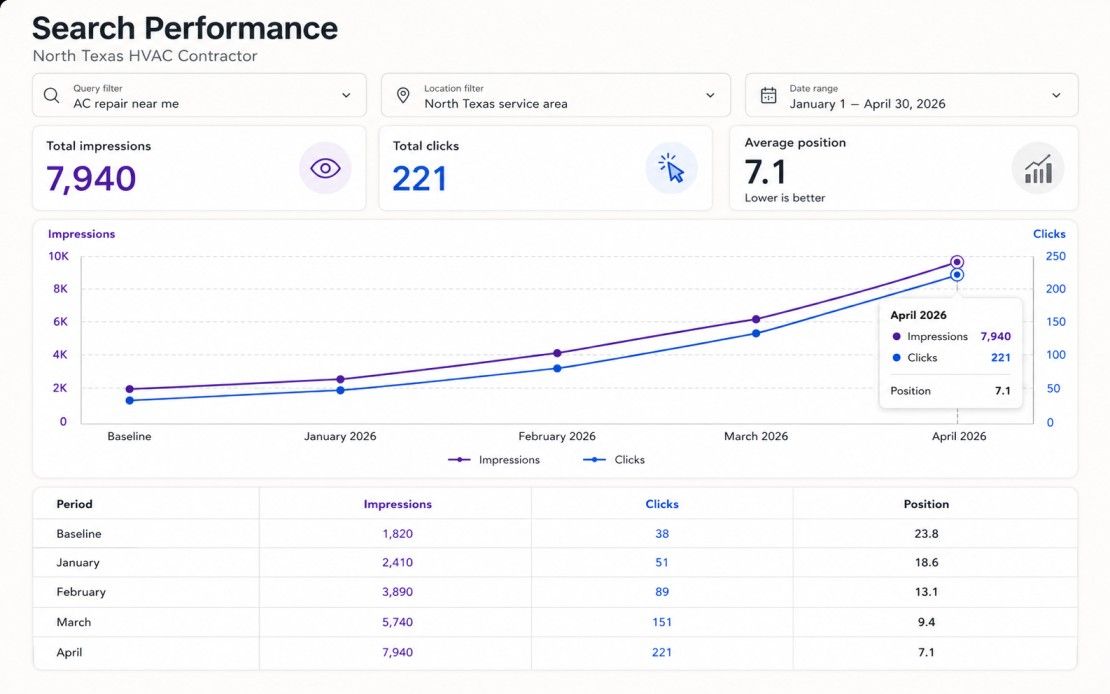
This HVAC SEO case study follows a sample North Texas contractor across four months of local search work. The company began at organic position 23.8 for “AC repair near me,” which placed it on page 3. Its Google Maps profile had an average grid position of 18.4 across the same target area. The HVAC SEO results track the same keyword, location, and grid throughout the campaign.
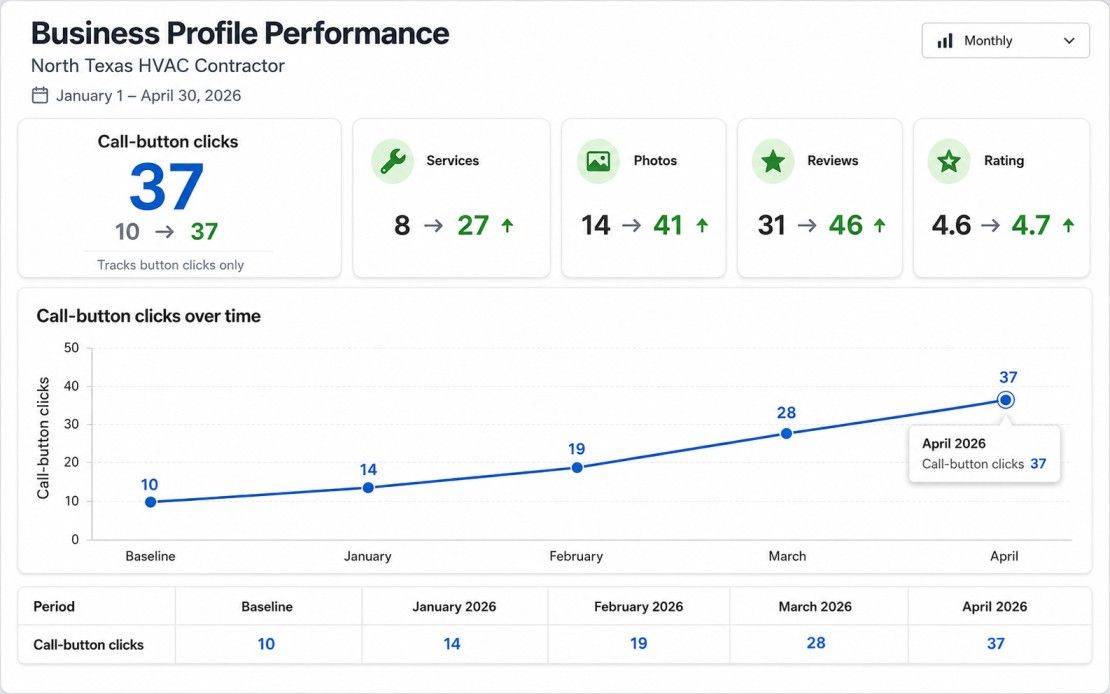
By the end of month four, the sample profile held an average Maps position of 2.8. It appeared in the top three at 64% of the tracked grid points. Organic position reached 7.1. Search impressions grew from 1,820 to 7,940, and Google Business Profile call-button clicks rose from 10 to 37.
The improvement followed work on the profile, website, citations, reviews, and local links. This HVAC SEO case study does not claim that one action caused the full HVAC SEO results.
HVAC SEO Results at a Glance
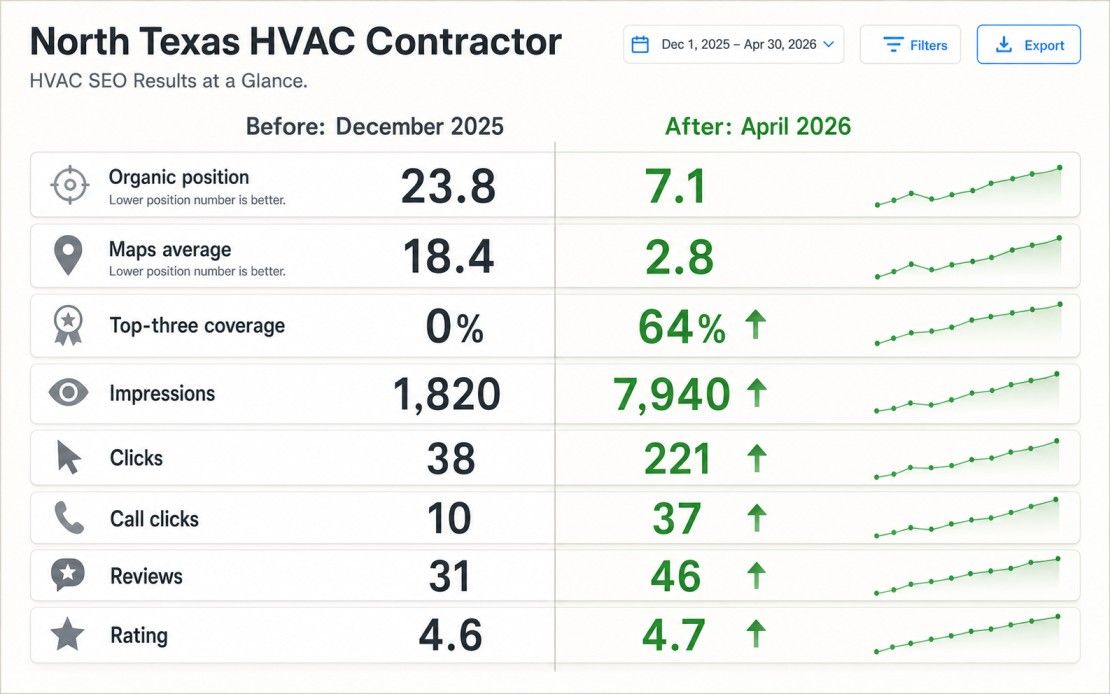
HVAC SEO improves how a heating and cooling company appears in Google Search and Google Maps. A useful HVAC SEO case study should track one search area, one date range, and the same high-intent keywords. Reliable HVAC SEO results should also keep rankings, clicks, calls, and booked jobs separate.
|
Metric |
Before |
After four months |
Measurement |
|
Organic position |
23.8 |
7.1 |
Fixed-location rank tracking |
|
Maps grid average |
18.4 |
2.8 |
Same 7 by 7 grid |
|
Top-three Maps coverage |
0% |
64% |
49 tracked grid points |
|
Search impressions |
1,820 |
7,940 |
GSC, equal 28-day periods |
|
Organic clicks |
38 |
221 |
GSC, equal 28-day periods |
|
GBP call clicks |
10 |
37 |
GBP performance |
|
Google reviews |
31 |
46 |
Public profile count |
|
Average rating |
4.6 |
4.7 |
Public profile rating |
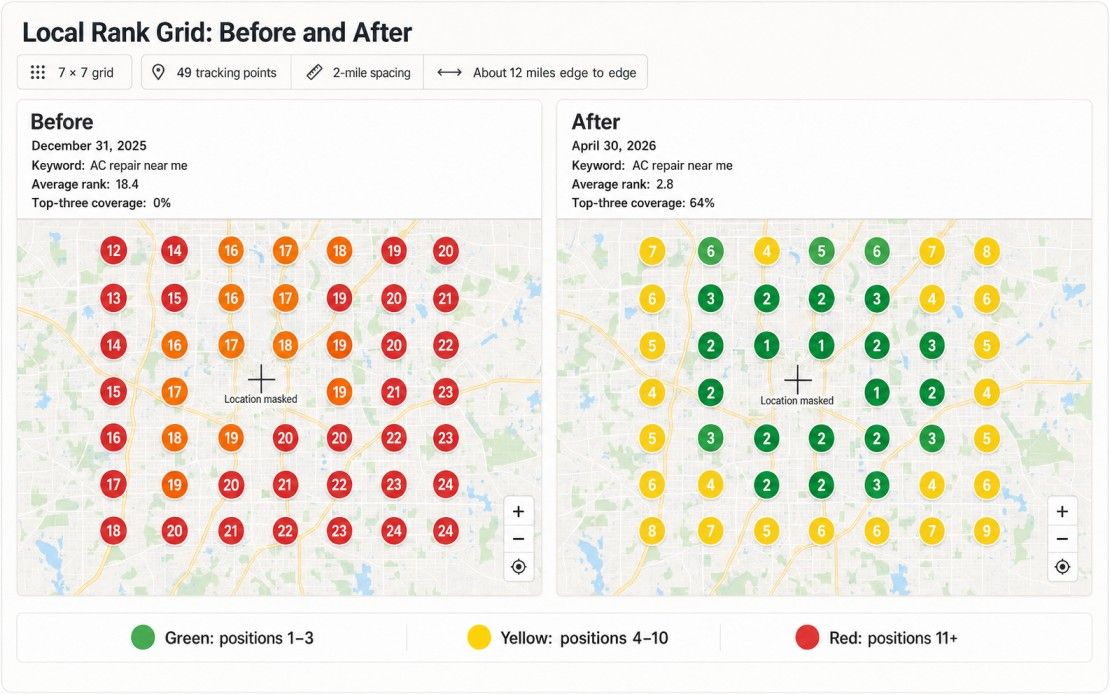
The Maps grid used 49 points with two miles between each point. It covered about 12 miles from edge to edge. The same settings were used before and after the work.
Starting Position in This HVAC SEO Case Study
The sample company served homeowners within a 15-mile North Texas area. It offered AC repair, furnace repair, maintenance, and replacement. Google had weak information about what it offered and where it worked.
For “AC repair near me,” the website held an average organic position of 23.8 from the fixed tracking location. That placed it on page 3. The Google Business Profile had an average Maps position of 18.4 across the local grid. None of the 49 points showed the company in the top three.
The website earned 1,820 impressions and 38 organic clicks during the baseline 28-day period. The Business Profile recorded 10 call-button clicks. These starting HVAC SEO results do not confirm completed calls, leads, or bookings.
The profile had 31 reviews with a 4.6 rating. Review activity was slow, and the team had no regular request process.
The website grouped most services on one short page. AC repair, furnace repair, and maintenance had no pages of their own. Its titles gave Google little service or location context.
What the HVAC SEO Case Study Audit Found
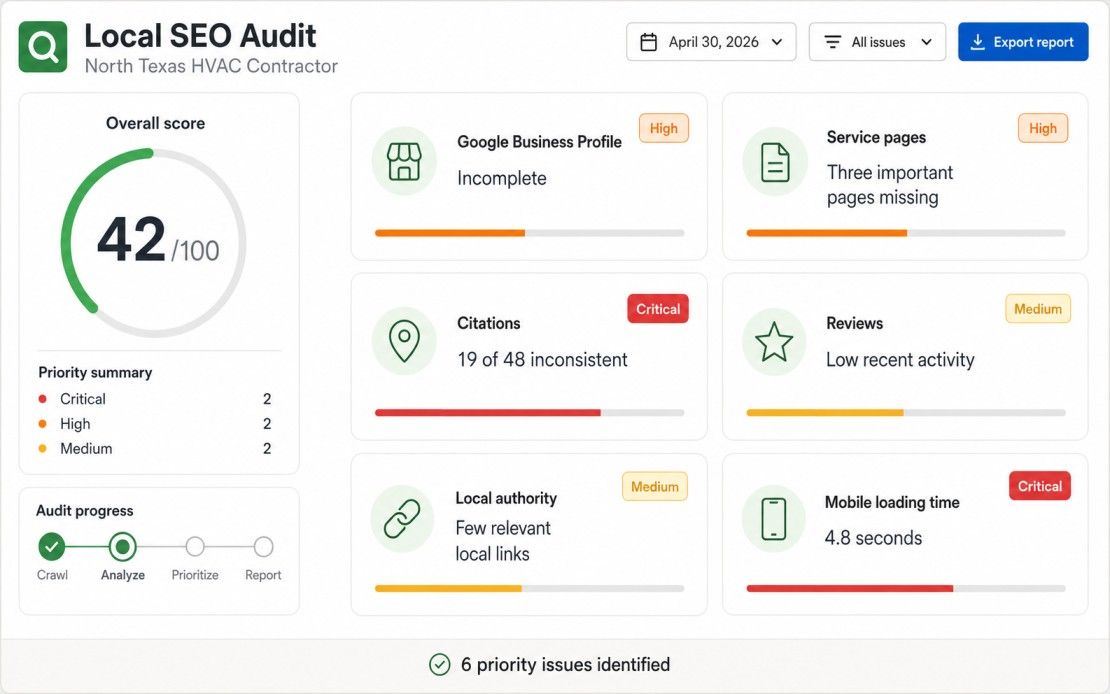
The audit found five connected problems: an incomplete Google Business Profile, weak service pages, inconsistent business listings, slow review growth, and little local authority. These gaps helped explain the weak starting HVAC SEO results. The HVAC SEO case study ranked the work by its likely effect on relevance, trust, website quality, and customer action.
1. The Profile Did Not Describe the Full Service Range
The primary category did not match the company’s main repair offer. Only eight services were listed, and few photos showed technicians, equipment, or completed work.
2. The Website Did Not Match High-Intent Searches
The main service page had 340 words and no service-area details. Important pages lacked clear headings, internal links, FAQs, and structured business data. Mobile pages took 4.8 seconds to show their main content.
3. Business Details Were Inconsistent
Nineteen of 48 reviewed listings used an old suite number, phone number, or business format. The incorrect entries appeared across general directories and trade listings.
4. Review Activity Had Slowed
The company had a 4.6 rating, but review recency was weak. No one tracked requests or responses.
5. Local Authority Was Thin
The website had links from large directories but few links connected to the city or HVAC trade. It was not listed by the local chamber, two supplier directories, or a community group it already supported.
These findings shaped the four-month plan. No single item was treated as a quick ranking trick.
The Four-Month Strategy Behind the HVAC SEO Results
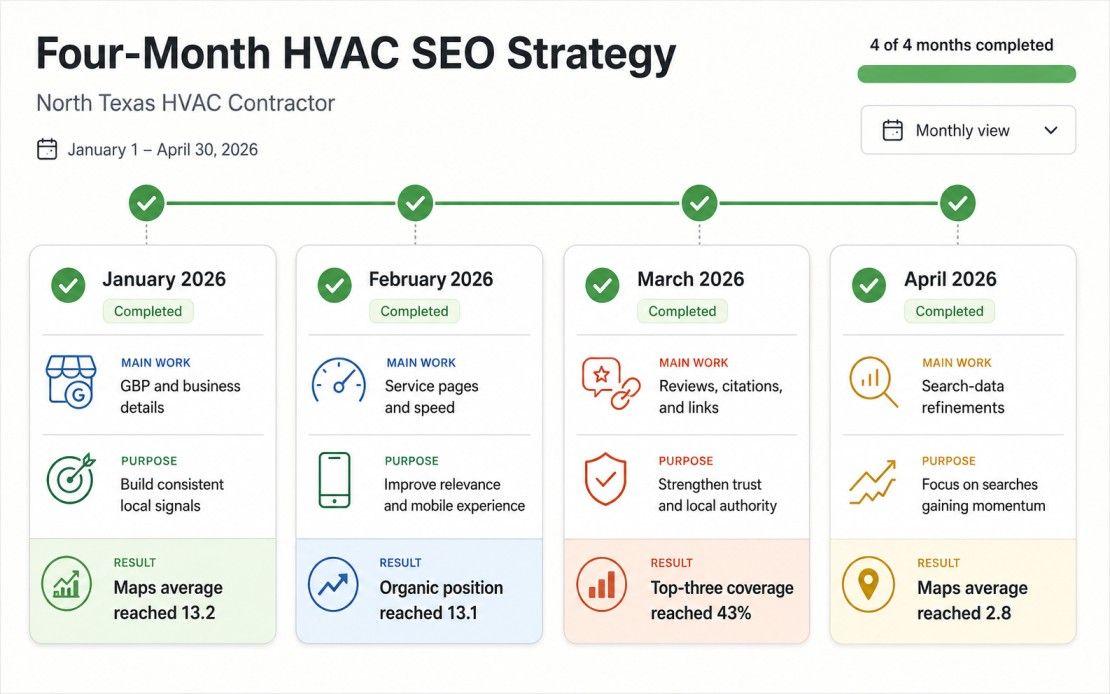
The campaign joined profile work with website and local authority work. Rankings were checked monthly, but the team did not rewrite the plan after every small change. This HVAC SEO case study follows the work in the order it happened. The monthly HVAC SEO results show the recorded progress.
Month 1: Fix the Local Foundation
The team used “HVAC contractor” as the main category. “Air conditioning contractor” and “heating contractor” became secondary categories. The service list grew from eight entries to 27.
Hours, service areas, phone details, and website links were checked. Old details were corrected on 12 major listings. Tracking links separated profile visits in analytics.
The Maps grid average moved from 18.4 to 13.2. Top-three coverage reached 8%.
Month 2: Build Pages for the Work Customers Need
Three service pages were created for AC repair, furnace repair, and HVAC maintenance. One service-area page was added for the main city.
Each page covered the service, warning signs, areas served, and how to request help. Titles and headings described the service and location in plain language.
Internal links connected the main pages. Matching LocalBusiness and service schema were added. Image and code work cut the main mobile loading time from 4.8 to 2.4 seconds.
At the end of February, organic position reached 13.1. The Maps grid average reached 8.9. Search impressions rose to 3,890 and clicks reached 89.
Month 3: Strengthen Reviews, Citations, and Local Trust
The company added a review request to its completed-job process. Technicians asked once, and the office sent one follow-up link. No reward was offered. The profile gained nine reviews, and each received a reply.
All 19 inconsistent citations were corrected. Twelve core listings were claimed or completed. Six relevant links were earned from a chamber profile, two supplier pages, a neighborhood sponsorship page, a local property partner, and a trade association member page.
By March 31, the Maps average reached 5.1. The company appeared in the top three at 43% of grid points. GBP call clicks reached 28 for the month.
Month 4: Improve What Search Data Showed
Search Console showed interest in emergency repair, same-day service, and units that stopped cooling. The AC repair page was updated around those needs. Short FAQs were added. Photos rose from 14 to 41, and the profile reached 46 reviews with a 4.7 rating.
On April 30, the organic position for “AC repair near me” reached 7.1. The Maps grid average reached 2.8, and top-three coverage reached 64%. GSC recorded 7,940 impressions and 221 clicks during the final 28-day period. GBP recorded 37 call-button clicks. These final HVAC SEO results completed the comparison in this HVAC SEO case study.
The work continued after month four because competitors, customer behavior, and Google results do not stay fixed.
How the Google Business Profile Supported the HVAC SEO Results
Google explains that local ranking mainly depends on relevance, distance, and prominence. The sample plan focused on clearer service information and stronger trust signals. In this HVAC SEO case study, the profile supported the same services and area as the website. That alignment formed part of the HVAC SEO results.
Our Google Business Profile optimization work included:
-
Matching the main category to the core HVAC offer
-
Adding accurate secondary categories
-
Expanding the service list from 8 to 27
-
Checking hours, phone details, service areas, and the website link
-
Adding 27 useful photos across four months
-
Requesting reviews after completed work
-
Replying to every new review
The team did not add keywords to the business name or create fake locations or reviews. The profile edits alone cannot be credited for the full ranking change.
Website and Authority Work Behind the HVAC SEO Results
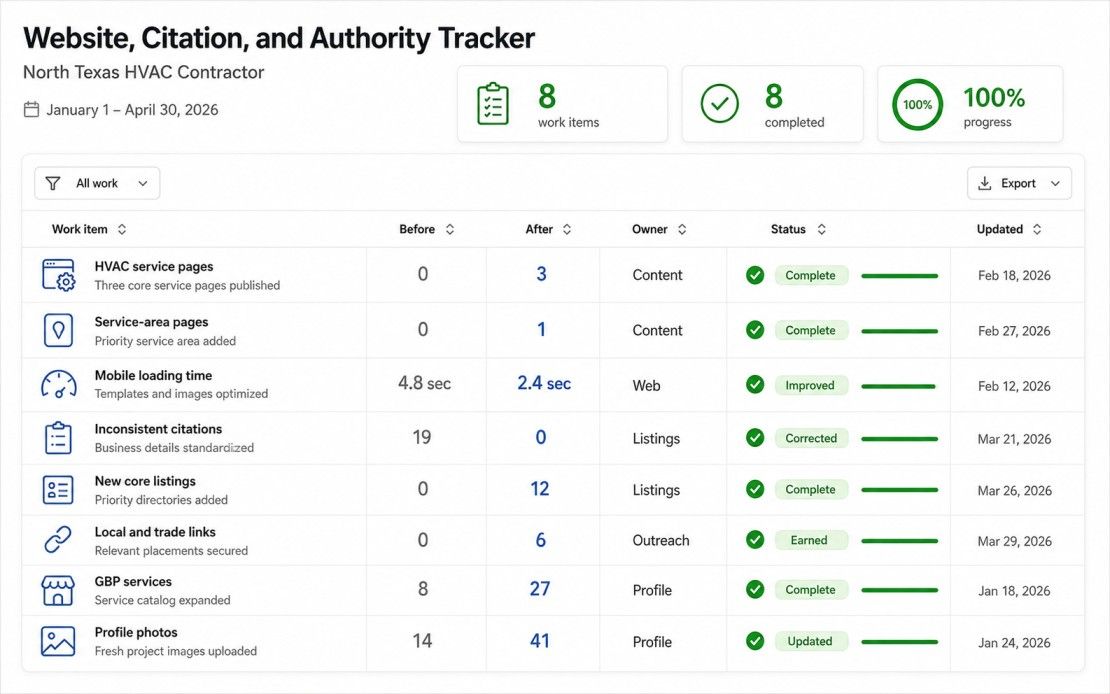
The main improvements were:
-
Three focused HVAC service pages
-
One service-area page
-
Clear titles, headings, and calls to action
-
Internal links between related pages
-
Visible business and service details supported by schema
-
Mobile loading time reduced from 4.8 to 2.4 seconds
-
Nineteen incorrect listings fixed
-
Twelve core listings claimed or completed
-
Six relevant local or trade links earned
The website explained the services. Citations repeated accurate business details. Reviews and local SEO backlinks added trust signals. The plan favored useful pages over mass-produced city pages.
The Sample HVAC SEO Results
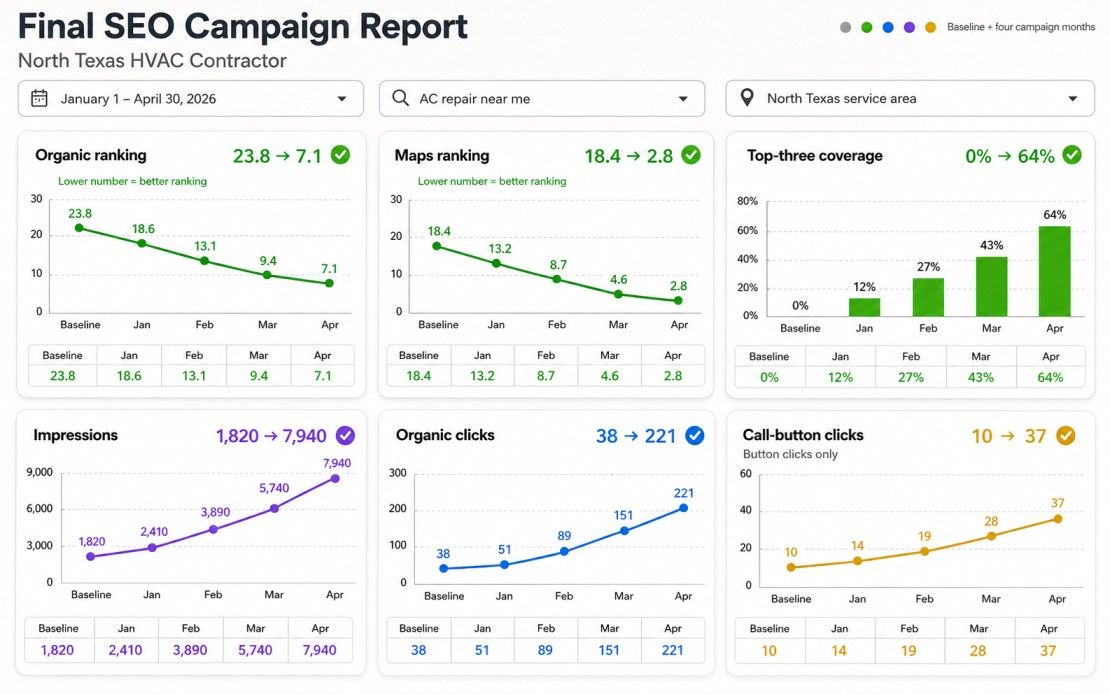
The HVAC SEO results show that the sample company moved from organic position 23.8 to 7.1 for “AC repair near me.” Its Maps grid average moved from 18.4 to 2.8, with top-three coverage at 64%. This HVAC SEO case study also recorded 7,940 impressions, 221 clicks, and 37 GBP call clicks.
|
Month |
Organic position |
Maps average |
Top-three grid coverage |
GSC impressions |
GSC clicks |
GBP call clicks |
|
Baseline |
23.8 |
18.4 |
0% |
1,820 |
38 |
10 |
|
January |
18.6 |
13.2 |
8% |
2,410 |
51 |
14 |
|
February |
13.1 |
8.9 |
22% |
3,890 |
89 |
19 |
|
March |
9.4 |
5.1 |
43% |
5,740 |
151 |
28 |
|
April |
7.1 |
2.8 |
64% |
7,940 |
221 |
37 |
These HVAC SEO results measure visibility and customer actions. They do not show completed calls, qualified leads, booked jobs, or revenue. A real HVAC SEO case study should add call tracking and CRM data before making those claims.
Rankings also change by location, device, competition, season, and Google updates. Another HVAC company should not expect the same HVAC SEO results or timeline. This HVAC SEO case study is a training example, not a promise.
What Companies Can Learn From This HVAC SEO Case Study
Use this checklist before judging HVAC SEO results or publishing an HVAC SEO case study:
-
Record the exact keyword and search area.
-
Keep the tracking grid and spacing the same.
-
Separate organic rankings from Maps rankings.
-
Compare equal date ranges in Search Console and GBP.
-
Check categories, services, hours, service areas, and contact details.
-
Create useful pages for real services.
-
Fix incorrect business listings.
-
Ask customers for honest reviews after completed work.
-
Earn local and trade links from real relationships.
-
Track calls and bookings beyond button clicks.
Local search work is connected. Reviews, citations, links, pages, and measurement need to support the same service and location story. Strong HVAC SEO results need clear evidence. A credible HVAC SEO case study should explain that evidence.
Get a Free HVAC Local SEO Audit
Not sure what keeps your HVAC company out of the Map Pack? Request a free local SEO audit. We will review the same areas covered in this HVAC SEO case study and show which gaps may be limiting your HVAC SEO results.
LocalHero will review your Google Business Profile, website, citations, reviews, and local competitors. You will get a clear list of the issues worth fixing first.
Results vary by market, location, competition, website history, and Google changes. Rankings are never guaranteed.
This HVAC SEO case study uses sample data for internal training.
Related reading
- Local SEO for HVAC Companies. The service behind the result.
- GBP Setup for HVAC Companies. The profile work described here, step by step.
- Local SEO ROI Calculator. Model the same call growth against your own job value.
Frequently Asked Questions
How Long Does HVAC SEO Take?
HVAC SEO often needs several months, but there is no fixed schedule. The starting position, city, competition, website, Google Business Profile, reviews, and available resources all affect the timeline. This HVAC SEO case study uses four months and does not promise the same HVAC SEO results for another company.
What Does “Map Pack” Mean?
The Map Pack is the group of local business results shown with a map for a location-based search. This HVAC SEO case study defines success as a top-three ranking at 64% of the fixed grid points. The HVAC SEO results do not rely on one search made from one office.
How Do You Measure HVAC Google Maps Rankings?
Use the same keyword, date settings, device type, grid center, grid size, and point spacing each time. A local grid shows how visibility changes across a service area. This method gives an HVAC SEO case study a fair comparison and makes the HVAC SEO results easier to check.
Do More Calls Prove That SEO Created More Customers?
No. GBP call clicks show that people pressed the call button. They do not confirm that every call connected, came from a qualified customer, or became a booked job. A complete HVAC SEO case study connects call tracking and CRM records. That makes the HVAC SEO results more useful.
Which HVAC SEO Work Matters Most?
Start with accurate business details, a complete Google Business Profile, useful service pages, consistent citations, recent honest reviews, and relevant local authority. The right order depends on the audit. This HVAC SEO case study uses a combined plan because no single task guarantees HVAC SEO results or Map Pack placement.
Manal Ghamir
Co-Founder | Sales and Content Creator
Manal Ghamir is an SEO writer and co-founder of LocalHero. She helps brands and local service businesses create answer-first content that ranks on Google, appears in AI answers, and turns search visibility into leads. Connect with her on LinkedIn.
More local SEO playbooks
Ready to be the local hero in your city?
Get a free local SEO audit of your site, Google Business Profile, citations, and top three Map Pack competitors. You will see exactly where you can win in 30 seconds.
- No long term contracts
- No lock in
- Cancel anytime